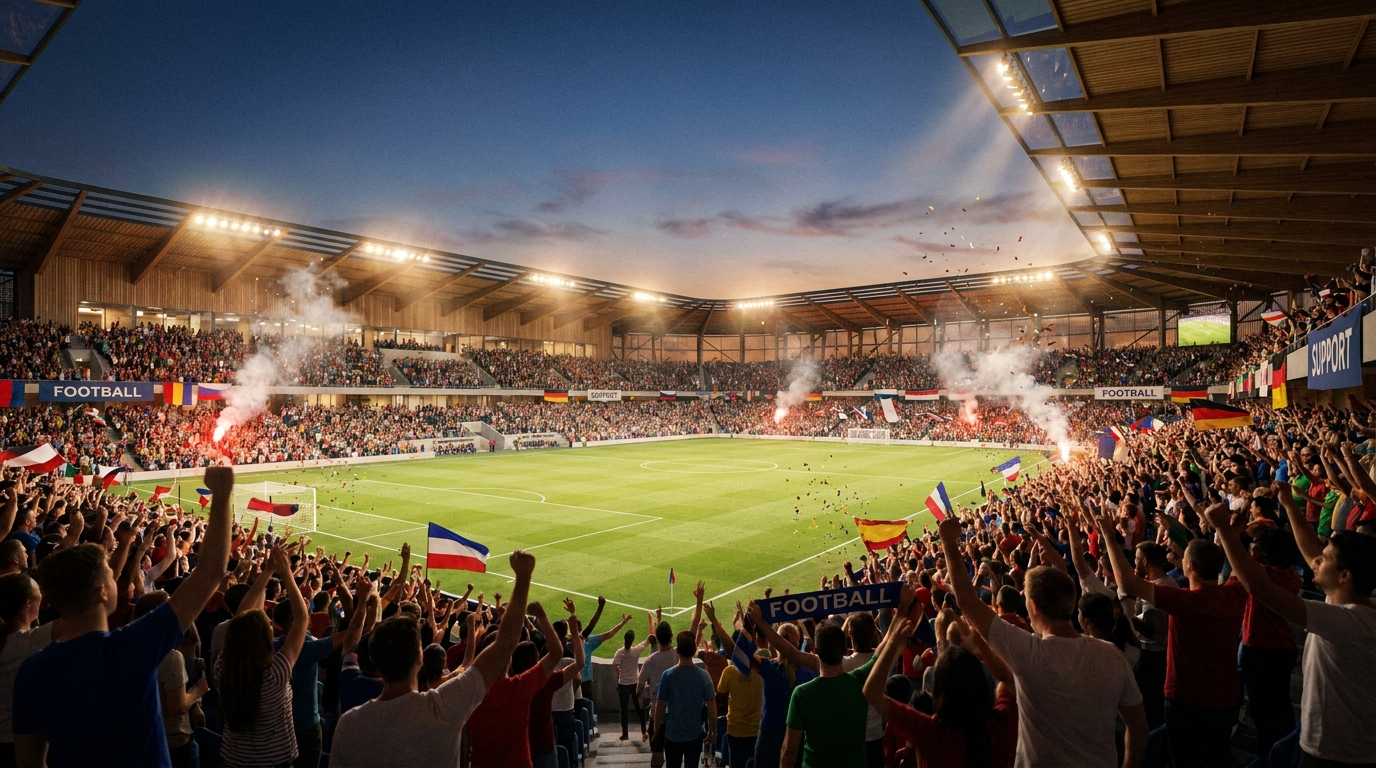
The FIFA World Cup 2026 Round of 16 Begins
The World Cup 2026 Round of 16 is the moment this tournament stops being a group-stage showcase and becomes a single-elimination gauntlet. Forty-eight teams have been trimmed down to sixteen, and from here on, there's no next match to make up for a bad night.
One mistake, one red card, one missed penalty, and a team's entire campaign is over. This page is built to be your home base for everything happening in the FIFA World Cup 2026 Round of 16 — fixtures, live scores, the knockout bracket, qualified teams, historical context, statistics, and predictions, all kept current as the action unfolds.
Whether you landed here to check tonight's kickoff time, understand how the new 48-team format reaches this stage, or settle an argument about the greatest Round of 16 match ever played, you're in the right place. Bookmark this page for the full World Cup 2026 fixtures list and World Cup 2026 schedule for this stage — both are kept current as each matchday is confirmed.
It's worth saying upfront: this edition of the World Cup is different from anything fans have watched before. The expansion from 32 to 48 teams means the road to the Round of 16 now runs through an extra knockout round, more countries than ever have a genuine shot at reaching this stage, and the bracket carries storylines that simply didn't exist in previous tournaments. We'll walk through all of that before getting into the actual fixtures, results, and live World Cup 2026 updates.
Why This Round of 16 Is Historically Important
Every World Cup Round of 16 matters, but 2026 carries a weight the format hasn't seen before. This is the first time the knockout rounds have been built around a 48-team tournament, hosted jointly across three countries — the United States, Mexico, and Canada — and stretched across a continent's worth of time zones and travel distances.
That has real consequences for the teams still standing. Squads have had to manage jet lag, climate swings, and pitch conditions that vary wildly from stadium to stadium. Coaches have had to rotate deeper squads than usual just to survive the group stage and an added knockout round before even reaching the Round of 16. The sixteen teams left here aren't just good — they're teams that have already proven they can handle a tournament format nobody has fully mastered yet.
There's also a symbolic weight to this stage. Historically, the Round of 16 has been where global football's power balance gets tested — where continental giants either confirm their status or get humbled by a side nobody saw coming. With more nations qualifying than ever before, 2026 has the potential to produce one of the most unpredictable Round of 16 stages in World Cup history.
Overview of the FIFA World Cup 2026 Knockout Stage
For the first time, the World Cup features 48 teams split into 12 groups of four. The top two finishers in each group qualify automatically for the knockout rounds, joined by the eight best third-placed teams across all groups — bringing the knockout field to 32 teams.
That group of 32 plays an entirely new Round of 32, a stage that didn't exist in the 32-team format fans grew up with. Winners from that round advance into the Round of 16, which is where this page picks up the story. From there, the format runs exactly as it always has: single-elimination, straight through to the final.
So the Round of 16 isn't simply "the first knockout round" anymore — it's the second cut. Every team here has already survived both a group stage and a knockout match, which means the sixteen sides remaining are, in theory, the sharpest, most battle-tested lineup the new format could produce.
Format at a glance: 48 teams → 12 groups of 4 → Round of 32 (32 teams) → Round of 16 (16 teams) → Quarterfinals (8 teams) → Semifinals (4 teams) → Final.
How Qualification Works
Qualification for the World Cup 2026 itself ran through separate continental pathways — UEFA, CONMEBOL, CONCACAF, CAF, AFC, and OFC each allocated a set number of direct qualifying spots, with several additional places decided through inter-confederation playoffs. As co-hosts, the United States, Mexico, and Canada received automatic qualification, a first for a World Cup shared by three host nations.
Once inside the tournament, qualification for the knockout stage worked through the group phase. Each of the 12 groups played a round-robin schedule, with three points for a win, one for a draw, and none for a loss. Standings were decided first by points, then goal difference, then goals scored, with head-to-head results and disciplinary conduct used as further tiebreakers where needed.
Group winners and runners-up advanced automatically to the Round of 32. The remaining eight spots went to the best-performing third-placed teams across all 12 groups, ranked using the same tiebreaker criteria. That system rewards teams that competed hard even in a tough group, and it's part of why this year's knockout bracket includes sides that might not have advanced under the old 32-team format.
From the Round of 32, straight knockout football took over — win and advance, lose and go home. The sixteen teams that made it through that round are the ones featured in the fixtures, bracket, and results sections on this page.
Why Every Match Matters
There's a simple reason the Round of 16 hits differently than anything before it: the safety net is gone. In the group stage, a poor result can be canceled out by a strong performance in the next game. From the Round of 16 onward, that cushion disappears entirely. Ninety minutes — or more, if needed — decide everything.
That changes how teams approach these matches. Coaches tend to set up more cautiously, star players carry more individual pressure, and squad depth becomes a genuine tactical weapon rather than a talking point. Managing suspensions, fitness, and fatigue over 90-plus minutes of knockout football is often what separates a quarterfinal run from an early exit.
It also changes how matches should be watched. A single set-piece, a moment of individual brilliance, or one defensive lapse can decide a nation's entire tournament. That's part of why the Round of 16 consistently produces some of the most replayed, most discussed moments in World Cup history.
How Extra Time Works
If a Round of 16 match is level after 90 minutes of regulation play, the game moves straight to extra time — there's no replay, and no do-over on another day. Extra time consists of two 15-minute halves, played in full, for a maximum additional 30 minutes of football.
Unlike the "golden goal" rule used in some past tournaments, the current format plays out both full periods regardless of whether a goal is scored early. That means a team can score in the 106th minute and still have to defend that lead for another nine minutes before the final whistle. If the two sides are still level after extra time, the match goes to a penalty shootout.
Penalty Shootout Rules
A shootout starts with each team taking five kicks, alternating one after another, all aimed at the same goal. Whichever team has scored more once both sides have taken five penalties wins the match outright.
If the score is still tied after those first five rounds, the shootout moves to sudden death — one kick per team per round, with the match ending the moment one side scores and the other misses. Only players who were on the pitch at the final whistle of extra time, including any late substitutes, are eligible to take part, and goalkeepers can be swapped between kicks if a team chooses to bring on a specialist. It's a format that has produced some of the most tense, talked-about moments in World Cup history, and the Round of 16 is where it shows up most often.
VAR Explained
Video Assistant Referee technology plays a significant role in Round of 16 matches, where the margin for error is smallest. VAR allows a team of off-field officials to review decisions in four specific categories: goals and whether there was an infringement in the buildup, penalty decisions, direct red card incidents, and cases of mistaken identity when a card is issued.
The on-field referee makes the final call, either after being advised by the VAR team or after reviewing the incident personally on a pitch-side monitor. In a knockout match, a VAR review can be the difference between advancing to the quarterfinals and heading home, which is why every review draws intense scrutiny from players, coaches, and fans alike.
Yellow Card Suspension Rules
Yellow card accumulation resets at the start of the knockout stage, meaning any bookings picked up during the group phase and Round of 32 don't carry forward into the Round of 16. From this point on, any player who picks up two yellow cards across the remaining knockout matches is suspended for the following game.
A straight red card at any point results in an automatic one-match suspension at minimum, sometimes more depending on the severity of the offense as reviewed by FIFA's disciplinary panel. Because a suspension can force a coach into an unplanned lineup change ahead of a quarterfinal, disciplinary decisions in the Round of 16 tend to carry extra weight and controversy.
Knockout Format Explained
From the Round of 16 onward, the tournament follows a straightforward single-elimination bracket. Sixteen teams play eight matches, and the eight winners move on to the quarterfinals. There are no second chances, no aggregate scoring across two legs, and no group standings to fall back on — just one match, one result, one team through.
Each fixture is seeded based on the team's position in its original group and the bracket path carried over from the Round of 32, meaning the matchups here were effectively set in motion back when the group stage draw was made. That's part of what makes the bracket worth following closely: a team's road to the final was shaped months before the Round of 16 kicked off.
How Teams Reach the Quarterfinals
Advancing out of the Round of 16 requires exactly one thing: winning the match, whether that happens in regulation, extra time, or on penalties. There's no aggregate or away-goals consideration at this stage of the World Cup — it's a single fixture, and the winner moves directly into the quarterfinal bracket.
Once the eight Round of 16 winners are confirmed, they're slotted into pre-determined quarterfinal pairings based on the original bracket structure. That means the identity of a team's quarterfinal opponent is often known well in advance of the Round of 16 kicking off, adding another layer of strategy to how coaches approach these matches — some may even be thinking a round ahead when making tactical decisions.
Historical Round of 16 Facts
The Round of 16 as a fixed knockout stage has existed since the tournament expanded to 24 teams in 1986, and it has developed a distinct statistical personality of its own compared to the rounds before and after it. A few patterns hold up consistently across previous tournaments: penalty shootouts appear disproportionately often at this stage relative to later rounds, host nations and defending champions have generally had a strong record of clearing the Round of 16, and matches pairing a heavy pre-tournament favorite against a lower-ranked side have produced some of the competition's biggest shocks.
Part of the reason for this is psychological as much as tactical. Teams reaching the Round of 16 for the first time in a generation often play with a freedom that more established sides lack, while traditional powers can tighten up under the weight of expectation. With the format now including 16 teams drawn from a 48-team pool rather than the previous 32, 2026 is positioned to add new data points to all of these long-running trends — a theme explored further in the World Cup Round of 16 Records and Historical Comparison sections later in this guide.
Biggest Round of 16 Upsets in World Cup History
The Round of 16 has a long track record of humbling favorites, and several results still get referenced whenever football fans debate the format's biggest shocks.
In 1990, Cameroon stunned Colombia 2-1 after extra time, with veteran forward Roger Milla scoring twice — including a goal set up by a now-famous defensive mistake from goalkeeper René Higuita — to send an African nation into the quarterfinals for the first time in tournament history.
In 2002, co-hosts South Korea beat Italy 2-1 after extra time, with Ahn Jung-hwan's golden goal eliminating one of the tournament favorites and setting off scenes of national celebration that are still remembered as one of the format's defining shocks.
In 2010, Ghana beat the United States 2-1 after extra time, with Asamoah Gyan's decisive strike sending an African side through to the quarterfinals at the expense of a USA team many had expected to progress further.
In 2014, Costa Rica eliminated Greece on penalties after a 1-1 draw, capping off a tournament run in which the Central American side had already topped a group containing Italy, England, and Uruguay — one of the format's more complete underdog stories.
What connects these results isn't just the scoreline. It's the context: a favorite caught off guard, a smaller footballing nation executing a gameplan to perfection, and moments of individual brilliance from players who weren't the headline names before kickoff.
Most Memorable Round of 16 Matches
Certain Round of 16 matches transcend their own tournament and become reference points for the sport itself.
Belgium's 4-3 extra-time win over the Soviet Union in 1986 remains one of the most chaotic knockout matches in tournament history, a seven-goal thriller that swung back and forth well into additional time. The Netherlands' 2-1 win over Mexico in 2014 is remembered for its late drama, with Wesley Sneijder's stoppage-time equalizer and Arjen Robben's last-minute penalty completing a dramatic turnaround. Belgium's 2018 comeback against Japan, overturning a two-goal deficit to win 3-2 through a rapid stoppage-time counterattack, is still held up as one of the great escapes in modern World Cup knockout football.
These are the matches fans replay years later, not because of what was at stake in the moment, but because of how the drama unfolded on the pitch.
Players Who Became Legends During the Round of 16
Some of football's most iconic individual moments have happened specifically at this stage of the World Cup. Roger Milla's corner-flag celebrations during Cameroon's 1990 run turned a veteran forward into one of the tournament's most enduring images. Ahn Jung-hwan's golden goal against Italy in 2002 made him a national hero in South Korea, even as it complicated his club career back in Italy at the time. James Rodríguez's chest-and-volley finish against Uruguay in the 2014 Round of 16 remains one of the most replayed individual goals in modern World Cup history, and it kick-started the scoring run that ultimately won him that year's Golden Boot.
The Round of 16 has a habit of turning good players into household names almost overnight, precisely because the stakes are high enough that every touch gets magnified.
FIFA World Cup 2026 Qualified Teams
Qualifying for a 48-team World Cup was a different challenge than anything previous cycles required. Confederations were allocated expanded slots to reflect the larger tournament, which meant more competitive balance across qualifying campaigns worldwide, but also more pressure on traditional heavyweights who could no longer assume an automatic path through.
Group winners in the tournament's own group stage locked in their spot in the Round of 32 without needing to rely on any tiebreaker scenarios, and several of the strongest performances of the group phase came from teams that dropped very few points across their three matches. Runners-up filled out the rest of the automatic places, with several groups coming down to goal difference or head-to-head results on the final matchday.
The most compelling storylines, though, often came from the third-placed teams chasing one of the eight remaining Round of 32 spots. With every group's third-placed finisher ranked against one another, several nations booked their spot in the knockout stage on goal difference alone, while a few well-fancied teams were eliminated at this stage despite picking up points along the way. Meanwhile, a handful of lower-ranked sides delivered some of the tournament's best individual performances to sneak through as one of the top eight third-placed finishers — exactly the kind of story the expanded format was designed to make possible.
The table below reflects the 32 teams that emerged from the group stage to contest the Round of 32, which in turn produced the 16 teams featured in the Fixtures, Bracket, and Live Match Results sections further down this page. Group, points, and goal-difference data will be finalized and updated as results are confirmed.

| Team | Group | Points | Goal Difference | Status |
|---|---|---|---|---|
| Team Name | Group A (Winner) | – | – | Qualified for R32 |
| Team Name | Group A (Runner-up) | – | – | Qualified for R32 |
| Team Name | Group B (Winner) | – | – | Qualified for R32 |
| Team Name | Group B (Runner-up) | – | – | Qualified for R32 |
| Team Name | Group C (Winner) | – | – | Qualified for R32 |
| Team Name | Group C (Runner-up) | – | – | Qualified for R32 |
| Team Name | Group D (Winner) | – | – | Qualified for R32 |
| Team Name | Group D (Runner-up) | – | – | Qualified for R32 |
| Team Name | Group E (Winner) | – | – | Qualified for R32 |
| Team Name | Group E (Runner-up) | – | – | Qualified for R32 |
| Team Name | Group F (Winner) | – | – | Qualified for R32 |
| Team Name | Group F (Runner-up) | – | – | Qualified for R32 |
| Team Name | Group G (Winner) | – | – | Qualified for R32 |
| Team Name | Group G (Runner-up) | – | – | Qualified for R32 |
| Team Name | Group H (Winner) | – | – | Qualified for R32 |
| Team Name | Group H (Runner-up) | – | – | Qualified for R32 |
| Team Name | Group I (Winner) | – | – | Qualified for R32 |
| Team Name | Group I (Runner-up) | – | – | Qualified for R32 |
| Team Name | Group J (Winner) | – | – | Qualified for R32 |
| Team Name | Group J (Runner-up) | – | – | Qualified for R32 |
| Team Name | Group K (Winner) | – | – | Qualified for R32 |
| Team Name | Group K (Runner-up) | – | – | Qualified for R32 |
| Team Name | Group L (Winner) | – | – | Qualified for R32 |
| Team Name | Group L (Runner-up) | – | – | Qualified for R32 |
| Team Name | Best 3rd Place (Group) | – | – | Qualified for R32 |
| Team Name | Best 3rd Place (Group) | – | – | Qualified for R32 |
| Team Name | Best 3rd Place (Group) | – | – | Qualified for R32 |
| Team Name | Best 3rd Place (Group) | – | – | Qualified for R32 |
| Team Name | Best 3rd Place (Group) | – | – | Qualified for R32 |
| Team Name | Best 3rd Place (Group) | – | – | Qualified for R32 |
| Team Name | Best 3rd Place (Group) | – | – | Qualified for R32 |
| Team Name | Best 3rd Place (Group) | – | – | Qualified for R32 |
This table will be updated with confirmed data as group-stage results are finalized. Teams that lost their Round of 32 fixture are not part of the current Round of 16 field — see the Fixtures and Bracket sections below for the confirmed Round of 16 lineup.
With the qualified teams and the road they took to get here laid out, it's time to look at what actually happens next on the pitch.
World Cup 2026 Round of 16 Fixtures
With the bracket locked in and every Round of 16 spot confirmed, attention turns to the schedule itself. Below is the complete list of fixtures for this stage, covering kickoff windows, host stadiums, and cities across the three co-host nations. Exact times and statuses refresh automatically as match dates arrive.
| Date | Match | Time | Stadium | City | Status |
|---|---|---|---|---|---|
| Jul 4, 2026 | Paraguay vs France | 10:00 PM | Lincoln Financial Field | Philadelphia, USA | Scheduled |
| Jul 4, 2026 | Canada vs Morocco | 6:00 PM | NRG Stadium | Houston, USA | Scheduled |
| Jul 5, 2026 | Brazil vs Norway | 4:00 PM | MetLife Stadium | East Rutherford, USA | Scheduled |
| Jul 5, 2026 | Mexico vs England | 6:00 PM | Estadio Azteca | Mexico City, Mexico | Scheduled |
| Jul 6, 2026 | Portugal vs Spain | 2:00 PM | AT&T Stadium | Arlington, USA | Scheduled |
| Jul 6, 2026 | USA vs Belgium | 2:00 PM | Lumen Field | Seattle, USA | Scheduled |
| Jul 7, 2026 | Argentina vs Egypt | 12:00 PM | Mercedes-Benz Stadium | Atlanta, USA | Scheduled |
| Jul 7, 2026 | Switzerland vs Colombia | 1:00 PM | BC Place | Vancouver, Canada | Scheduled |
All times shown are local to the host venue. Convert to your local time zone for accurate kickoff planning. Kickoff times are as widely reported ahead of matchday and should be cross-checked against the official FIFA schedule for last-minute changes.

Match-by-Match Preview
Each Round of 16 fixture carries its own tactical story, shaped by how the two teams reached this stage and what's waiting for the winner in the quarterfinals. The previews below apply a consistent framework to every matchup so you can compare fixtures side by side, with team-specific details updated as each tie is confirmed.

Paraguay vs France
As the opening fixture of the round, this match sets an early tone for how referees and VAR officials are calibrating close calls at this stage of the tournament.
Tactical Analysis: Freshness is the deciding factor to watch here — whichever side rotated more effectively through the group stage and Round of 32 typically has an edge in the tournament's most physically demanding round.
- Team Form
- Recent results pending
- Key Players
- To be confirmed
- Head-to-Head
- Prior meetings pending
- Prediction
- Pending
- Venue
- Lincoln Financial Field, Philadelphia, USA
- Kickoff
- 10:00 PM, Jul 4, 2026
- Match Importance
- The winner heads directly into a confirmed quarterfinal slot, making early tournament fitness management a quiet but decisive factor.
Canada vs Morocco
A contrast in styles typically defines this kind of fixture, with a possession-oriented side facing an opponent built around fast transitions.
Tactical Analysis: Expect the possession-heavy side to probe patiently on the flanks while the counter-attacking side looks to spring forward the moment the ball is turned over in midfield.
- Team Form
- Recent results pending
- Key Players
- To be confirmed
- Head-to-Head
- Prior meetings pending
- Prediction
- Pending
- Venue
- NRG Stadium, Houston, USA
- Kickoff
- 6:00 PM, Jul 4, 2026
- Match Importance
- Context on trajectory pending
Brazil vs Norway
Continental rivalries often add an extra layer of intensity to fixtures like this, with history between the two federations shaping the pre-match narrative as much as current form does.
Tactical Analysis: Set-piece efficiency is worth tracking closely in matches with this kind of rivalry backdrop, since emotionally charged fixtures tend to produce more fouls and dead-ball opportunities than average.
- Team Form
- Recent results pending
- Key Players
- To be confirmed
- Head-to-Head
- Prior meetings pending
- Prediction
- Pending
- Venue
- MetLife Stadium, East Rutherford, USA
- Kickoff
- 4:00 PM, Jul 5, 2026
- Match Importance
- Context on trajectory pending
Mexico vs England
This fixture is shaping up as a physical battle between two sides built around defensive organization rather than open, attacking football.
Tactical Analysis: With two well-drilled defenses on show, clear-cut chances are likely to be scarce, raising the odds that this match is decided by a set piece or an individual moment of quality rather than sustained pressure.
- Team Form
- Recent results pending
- Key Players
- To be confirmed
- Head-to-Head
- Prior meetings pending
- Prediction
- Pending
- Venue
- Estadio Azteca, Mexico City, Mexico
- Kickoff
- 6:00 PM, Jul 5, 2026
- Match Importance
- Context on trajectory pending
Portugal vs Spain
Both goalkeepers enter this fixture in strong form, setting up a match that could easily be decided by fine margins — or a shootout.
Tactical Analysis: Given how well both sides have defended so far, this is one of the more likely candidates on the schedule to go beyond 90 minutes.
- Team Form
- Recent results pending
- Key Players
- To be confirmed
- Head-to-Head
- Prior meetings pending
- Prediction
- Pending
- Venue
- AT&T Stadium, Arlington, USA
- Kickoff
- 2:00 PM, Jul 6, 2026
- Match Importance
- Context on trajectory pending
USA vs Belgium
A younger, less experienced squad faces a side built around World Cup knockout experience in this fixture, setting up an interesting test of composure under pressure.
Tactical Analysis: Expect the more experienced side to try to control tempo and limit the game's chaos, while the younger squad may look to inject pace and unpredictability whenever possible.
- Team Form
- Recent results pending
- Key Players
- To be confirmed
- Head-to-Head
- Prior meetings pending
- Prediction
- Pending
- Venue
- Lumen Field, Seattle, USA
- Kickoff
- 2:00 PM, Jul 6, 2026
- Match Importance
- Context on trajectory pending
Argentina vs Egypt
Travel and climate adjustment could play a bigger role in this fixture than in most, given the distances both squads have covered across the three host nations.
Tactical Analysis: Squad rotation and recovery management heading into this match are worth watching closely, since fatigue at this stage of a 48-team tournament can be just as decisive as tactics.
- Team Form
- Recent results pending
- Key Players
- To be confirmed
- Head-to-Head
- Prior meetings pending
- Prediction
- Pending
- Venue
- Mercedes-Benz Stadium, Atlanta, USA
- Kickoff
- 12:00 PM, Jul 7, 2026
- Match Importance
- Context on trajectory pending
Switzerland vs Colombia
As the closing fixture of the round, this match completes the quarterfinal lineup and sets the shape of the bracket heading into the tournament's second half.
Tactical Analysis: Both coaching staffs already know the identity of the confirmed quarterfinal opponent, which can subtly shape team-selection risk-taking in this fixture.
- Team Form
- Recent results pending
- Key Players
- To be confirmed
- Head-to-Head
- Prior meetings pending
- Prediction
- Pending
- Venue
- BC Place, Vancouver, Canada
- Kickoff
- 1:00 PM, Jul 7, 2026
- Match Importance
- With every other quarterfinal slot already filled by this point, both sides know exactly what — and who — is waiting for the winner.
Live Match Results
The table below carries the official World Cup 2026 results for this stage as they're confirmed, match by match, alongside whether a tie needed extra time or penalties to settle.
| Match | Result | Winner | Extra Time | Penalties |
|---|---|---|---|---|
| Paraguay vs France | Not yet played | TBD | – | – |
| Canada vs Morocco | Not yet played | TBD | – | – |
| Brazil vs Norway | Not yet played | TBD | – | – |
| Mexico vs England | Not yet played | TBD | – | – |
| Portugal vs Spain | Not yet played | TBD | – | – |
| USA vs Belgium | Not yet played | TBD | – | – |
| Argentina vs Egypt | Not yet played | TBD | – | – |
| Switzerland vs Colombia | Not yet played | TBD | – | – |
Results populate in real time as final whistles blow. Refresh this page during match hours for the latest World Cup 2026 live updates.
World Cup 2026 Round of 16 Bracket
Following eight results across the Round of 16 is easier with a visual map of how the bracket connects to the quarterfinals, semifinals, and final. Rather than tracking scorelines in isolation, the bracket shows exactly which two Round of 16 winners will meet next, and how each side's path could eventually lead to the championship match.
The bracket below reflects the structure carried over from the Round of 32 draw, meaning every quarterfinal pairing was effectively set before the Round of 16 kicked off. As results come in, each match slot updates to show the confirmed winner moving forward.
Quarterfinal pairings are already locked in from the Round of 32 draw — for example, the winner of Paraguay vs France plays the winner of Canada vs Morocco regardless of who wins each Round of 16 match. The actual advancing team will replace each "Winner" placeholder as results are confirmed.
Today's Matches
While the Match-by-Match Preview section above covers full tactical breakdowns for the entire round, this section is designed as a quick, mobile-friendly snapshot of whichever fixtures are being played today. Cards are added and refreshed as each matchday arrives.
Paraguay vs France
- Kickoff
- 10:00 PM, Jul 4, 2026
- Stadium / City
- Lincoln Financial Field, Philadelphia, USA
- Prediction
- Pending
- Win Probability
- Paraguay –% · Draw –% · France –%
- Expected Score
- Pending
- Recent Form
- Last five results pending
- Key Player
- To be confirmed
- Injury News
- Updated closer to kickoff
Canada vs Morocco
- Kickoff
- 6:00 PM, Jul 4, 2026
- Stadium / City
- NRG Stadium, Houston, USA
- Prediction
- Pending
- Win Probability
- Canada –% · Draw –% · Morocco –%
- Expected Score
- Pending
- Recent Form
- Last five results pending
- Key Player
- To be confirmed
- Injury News
- Updated closer to kickoff
Brazil vs Norway
- Kickoff
- 4:00 PM, Jul 5, 2026
- Stadium / City
- MetLife Stadium, East Rutherford, USA
- Prediction
- Pending
- Win Probability
- Brazil –% · Draw –% · Norway –%
- Expected Score
- Pending
- Recent Form
- Last five results pending
- Key Player
- To be confirmed
- Injury News
- Updated closer to kickoff
Mexico vs England
- Kickoff
- 6:00 PM, Jul 5, 2026
- Stadium / City
- Estadio Azteca, Mexico City, Mexico
- Prediction
- Pending
- Win Probability
- Mexico –% · Draw –% · England –%
- Expected Score
- Pending
- Recent Form
- Last five results pending
- Key Player
- To be confirmed
- Injury News
- Updated closer to kickoff
Cards for the remaining fixtures appear here as each match day arrives.
FIFA World Cup 2026 Predictions
Tournament Favourites: 2–3 nations widely considered the strongest squads remaining, updated with current form, squad depth, and tournament pedigree.
Dark Horses: 1–2 nations capable of an unexpected deep run, based on tactical setup or a standout individual performer.
Potential Upsets: Fixture(s) where the lower-ranked side has a realistic path to victory, and why.
Tactical Observations: Across the Round of 16 so far, a few trends stand out: teams sitting in deeper defensive blocks have generally limited high-quality chances against more possession-heavy opponents, while set-piece efficiency has played an outsized role in deciding tight matches. Expect similar patterns to shape the remaining fixtures, particularly in matches where the two sides are closely ranked.
Standout Players
- Golden Boot Contenders
- Player Name, Team, Goals Scored
- Best Goalkeepers
- Player Name, Team, Clean Sheets / Save Percentage
- Rising Stars
- Player Name, Team, breakout performance context
- Most Assists
- Player Name, Team, Assist Count
These names are updated continuously as the Round of 16 plays out and new performances shift the leaderboard heading into the quarterfinals.
Top Scorers: The Golden Boot Race
Every World Cup has a race that runs quietly alongside the results table, and it's often the one that decides how a tournament is remembered years later. The Golden Boot doesn't just crown the best finisher of the competition — it frequently becomes the defining personal narrative of the whole event, the way Ronaldo's redemption arc did in 2002 or Kylian Mbappé's final-match hat-trick did in 2022. For the FIFA World Cup 2026 Round of 16, the scoring race enters its most decisive phase, because this is where a golden run can either accelerate toward the trophy or end abruptly against a knockout opponent that simply shuts a striker down.
How Goals Are Counted
Every goal scored in open play — from a rebound, header, free kick, or penalty — during regulation and extra time counts toward a player's tournament total. Own goals are credited to the team, not the scoring individual, so they don't factor into any player's personal tally. Goals scored during a penalty shootout do not count toward the Golden Boot; only goals scored while the ball is in open play across the 90 or 120 minutes are counted.
Golden Boot Tiebreakers
When two or more players finish the tournament level on goals, FIFA applies a set order of tiebreakers: assists first, then total minutes played, with fewer minutes ranked higher since it reflects greater scoring efficiency. This is exactly how Thomas Müller edged the 2010 Golden Boot over closely matched rivals — not on raw goal count alone, but on the assists tiebreaker.
Why Round of 16 Goals Matter So Much
Scoring in the knockout rounds carries more weight than a group-stage goal for two reasons. First, knockout defenses are tighter — teams set up more conservatively once elimination is on the line, so every goal is harder to create. Second, a goal at this stage often directly decides a nation's tournament fate, which raises its historical profile regardless of how it affects the Golden Boot math.
Historical Golden Boot Winners
The Golden Boot has been won with as few as five goals and as many as ten, depending on how a tournament's scoring spreads out. Ronaldo's eight goals in 2002 remains one of the most complete Golden Boot campaigns in tournament history, built on clinical finishing rather than volume of chances. Miroslav Klose, meanwhile, never won a Golden Boot outright but retired as the all-time World Cup scoring leader by accumulating goals patiently across four separate tournaments — proof that longevity and knockout composure matter as much as any single standout year.
Players Who Elevate Their Tally in Knockout Football
Certain strikers are simply built for elimination football — they might go quiet during the group stage against packed defenses, then come alive once the tempo and stakes rise in the Round of 16 onward. Watching for this shift is one of the more reliable ways to spot who's going to be lifting the Golden Boot in the tournament's final week.
| Rank | Player | Team | Goals | Assists | Minutes |
|---|---|---|---|---|---|
| 1 | Player | Team | – | – | – |
| 2 | Player | Team | – | – | – |
| 3 | Player | Team | – | – | – |
| 4 | Player | Team | – | – | – |
| 5 | Player | Team | – | – | – |
Standings update after every Round of 16 fixture and continue through the remainder of the tournament.
Tournament Statistics
Numbers rarely tell the whole story of a football match, but across an entire tournament, they reveal patterns that individual results can hide. Tracking statistics through the Round of 16 gives a clearer read on which teams are peaking, which are relying on efficiency over dominance, and which are quietly building the kind of defensive record that wins World Cups.
Total goals and average goals per match show whether this tournament is trending toward an attacking or defensive edition. Knockout football almost always drags scoring rates down compared to the group stage, since elimination is permanent and coaches naturally become more risk-averse.
Clean sheets are one of the strongest predictors of a deep run. Teams that go multiple knockout matches without conceding tend to have the tactical discipline and goalkeeping form needed to survive a shootout if it comes to that.
Possession and passing accuracy matter less in isolation than in context — a team dominating possession without creating quality chances is often more vulnerable in knockout football than a side happy to sit deep and break quickly.
Shot conversion and Expected Goals (xG) together tell you whether a team's results reflect genuine quality or a run of finishing that's outperforming the underlying chances created. A team consistently scoring above its xG is either exceptionally clinical or riding a hot streak that knockout opponents will eventually punish.
Corners and saves speak to a team's set-piece threat and its goalkeeper's workload — both become increasingly decisive as matches get tighter and open-play chances become scarce.
Yellow cards and red cards reflect discipline under pressure, and in the Round of 16, a single suspension can reshape an entire quarterfinal lineup.
Biggest win, highest-scoring match, and longest winning streak are the tournament's headline statistical storylines — the numbers most likely to be referenced years later when this edition of the World Cup is discussed.
Attendance figures reflect the scale of the expanded 48-team format, with stadiums across the United States, Mexico, and Canada testing new capacity benchmarks.
Home continent performance looks at how teams from the host confederation — CONCACAF — have fared compared to traditional European and South American powerhouses, a storyline unique to a tournament hosted across North America.
| Statistic | Value |
|---|---|
| Total Goals | – |
| Average Goals per Match | – |
| Clean Sheets | – |
| Average Possession (Winning Teams) | –% |
| Passing Accuracy | –% |
| Shot Conversion Rate | –% |
| Expected Goals (xG) Total | – |
| Corners per Match | – |
| Saves per Match | – |
| Yellow Cards | – |
| Red Cards | – |
| Biggest Win | – |
| Highest-Scoring Match | – |
| Longest Winning Streak | – |
| Total Attendance | – |
| Highest Attendance (Single Match) | – |
Daily Update Log
This page is refreshed after every FIFA World Cup 2026 Round of 16 match, not just once a day — meaning fixtures, results, statistics, and the bracket above are all kept current as results are confirmed. Rather than rewriting old information, each completed match day gets its own dated entry below, so the log builds into a running, chronological record of the entire knockout stage.
July X, 2026
- Match Completed
- Paraguay vs France
- Final Score
- Pending
- Goal Scorers
- Pending
- Player of the Match
- Pending
- Key Moments
- Turning points, red cards, VAR reviews
- Quarterfinal Qualification
- Confirmed team pending
- Injury Updates
- Pending
- Suspension Updates
- Pending
July X, 2026
- Match Completed
- Canada vs Morocco
- Final Score
- Pending
- Goal Scorers
- Pending
- Player of the Match
- Pending
- Key Moments
- Turning points, red cards, VAR reviews
- Quarterfinal Qualification
- Confirmed team pending
- Injury Updates
- Pending
- Suspension Updates
- Pending
July X, 2026
- Match Completed
- Brazil vs Norway
- Final Score
- Pending
- Goal Scorers
- Pending
- Player of the Match
- Pending
- Key Moments
- Turning points, red cards, VAR reviews
- Quarterfinal Qualification
- Confirmed team pending
- Injury Updates
- Pending
- Suspension Updates
- Pending
New entries are appended below the most recent one as each match day concludes — nothing above is overwritten or removed, so this log remains a complete record of the Round of 16 from start to finish.
World Cup Round of 16 Records
The Round of 16 has existed as a fixed knockout stage since the tournament expanded to 24 teams in 1986, and in the editions since, it has produced some of the most statistically extreme results in World Cup history.
Most goals in a Round of 16 match: Belgium's 4-3 extra-time win over the Soviet Union in 1986 produced seven goals in a single match, still regarded as one of the most chaotic knockout games the format has seen.
Largest victory: Spain's 5-1 win over Denmark at the 1986 World Cup, powered by a four-goal performance from Emilio Butragueño, remains one of the most one-sided results ever recorded at this stage of the competition.
Most penalty shootouts: The Round of 16 has developed a reputation as a shootout-heavy stage of the tournament, with multiple editions since 1990 seeing several of the eight fixtures decided from the penalty spot rather than in normal or extra time — a trend covered in more depth in the Penalty Shootout Rules section earlier in this guide.
Fastest goal: Knockout football at this stage has occasionally produced early strikes inside the opening minutes, though pinpointing a single outright record requires match-by-match verification rather than one widely agreed figure.
Latest winning goal: Extra-time drama has become a hallmark of the Round of 16, with several editions producing decisive goals in the closing minutes of the second period of extra time — often just before a shootout would have been required.
Most clean sheets: Defensively organized nations with strong goalkeeping have regularly advanced through this stage without conceding, reinforcing how valuable defensive solidity becomes once the format goes single-elimination.
Highest attendance: Given the scale of stadiums used across past tournaments, several Round of 16 matches have drawn crowds in excess of 80,000, and the larger venues being used for 2026 across the United States are expected to challenge those historical benchmarks.
Biggest upset: Round of 16 history is full of shock results involving lower-ranked nations eliminating pre-tournament favorites — the Biggest Round of 16 Upsets section earlier in this guide covers several of the most notable examples in detail.
Most successful nations: Traditional football powers, including Brazil, Germany, and Argentina, have historically cleared the Round of 16 stage more consistently than most, reflecting squad depth and knockout experience built up across multiple tournament cycles.
Most appearances: Nations that qualify for the World Cup regularly tend to accumulate the most Round of 16 appearances over time simply through consistent qualification, separate from any single tournament's outcome.
Historical Comparison
Comparing the 2026 Round of 16 to past editions shows just how much the knockout stage has evolved as a tactical and physical event.
1998 introduced the modern 32-team format and, with it, a more standardized Round of 16 structure. Defensive organization was still built largely around man-marking principles, and squads relied heavily on individual brilliance to break down deep defenses.
2002, hosted jointly by Japan and South Korea, saw shock results ripple through the Round of 16 as co-host South Korea's deep run reshaped expectations for how far a well-organized, high-effort side could go against traditional football powers.
2006 in Germany leaned heavily into disciplined defensive structures, with several Round of 16 matches decided by fine tactical margins and set-piece efficiency rather than open, end-to-end football.
2010 in South Africa is remembered for a Round of 16 that punished technically gifted teams unprepared for the altitude and travel demands of the tournament, alongside the continued rise of high-pressing football.
2014 in Brazil delivered some of the most dramatic extra-time knockout football in recent memory, with fitness and squad depth becoming decisive factors as matches stretched deep into additional time.
2018 in Russia was the first World Cup to use VAR throughout the knockout stage, fundamentally changing how penalty decisions and marginal offside calls were adjudicated in must-win matches.
2022 in Qatar showcased the sport's growing reliance on data-driven tactical preparation, with teams arriving at the Round of 16 armed with detailed opposition analysis that shaped in-game adjustments almost in real time.
Across these tournaments, the biggest shifts have been tactical evolution toward coordinated pressing systems, more sophisticated defensive organization built around compact blocks, the introduction and refinement of VAR, major advances in sports science and player recovery protocols, deeper squads capable of rotating without losing quality, and the rise of data analytics as a core part of matchday preparation. The 2026 Round of 16, played across an expanded 48-team format and three host nations, represents the newest chapter in that ongoing evolution.
Tactical Trends
Knockout football rewards different qualities than the group stage, and the tactical patterns showing up across the Round of 16 reflect that shift.
High pressing remains a preferred approach for teams looking to force turnovers in dangerous areas, though it carries real risk in knockout football — a failed press can leave a team exposed to exactly the kind of transition goal that ends a tournament.
Low blocks have become the default setup for underdogs facing stronger opposition, prioritizing compactness and patience over territorial dominance, betting that one moment of quality — or a shootout — will be enough.
Counter-attacks thrive against teams committed to attacking football, and some of the most memorable Round of 16 goals in tournament history have come from rapid transitions after an opponent's failed high-line push forward.
Wing play continues to be one of the most reliable ways to break down organized defenses, stretching a back line horizontally before delivering into the box rather than trying to force play through a crowded central channel.
The false nine role remains a useful disruptor against defenses set up to mark a traditional target striker, dragging a center-back out of position and creating space for late-arriving runners.
Double pivot midfield setups have become increasingly common in knockout football, offering defensive security against counters while still allowing one midfielder to step forward and support attacks.
Set pieces carry outsized importance at this stage, often deciding matches that open play alone couldn't separate — a reflection of how difficult it becomes to create clear-cut chances against a well-drilled knockout defense.
Defensive transitions — how quickly a team regroups the moment it loses possession — have become a core coaching focus, since a few seconds of disorganization is often all a knockout opponent needs.
Goalkeeper distribution has evolved into a genuine tactical weapon, with modern keepers expected to start attacks with accurate long or short distribution rather than simply clearing danger.
Fitness demands at this stage are unlike anything else in the tournament — extra time, quick turnarounds between matches, and travel across host cities all test squad depth in ways that often decide which teams have anything left for the quarterfinals.
Fan Experience
The Round of 16 is where the World Cup's atmosphere noticeably intensifies. Stadiums fill with a nervous energy that group-stage matches rarely produce, since every fan in the building knows a single moment could end their nation's tournament.
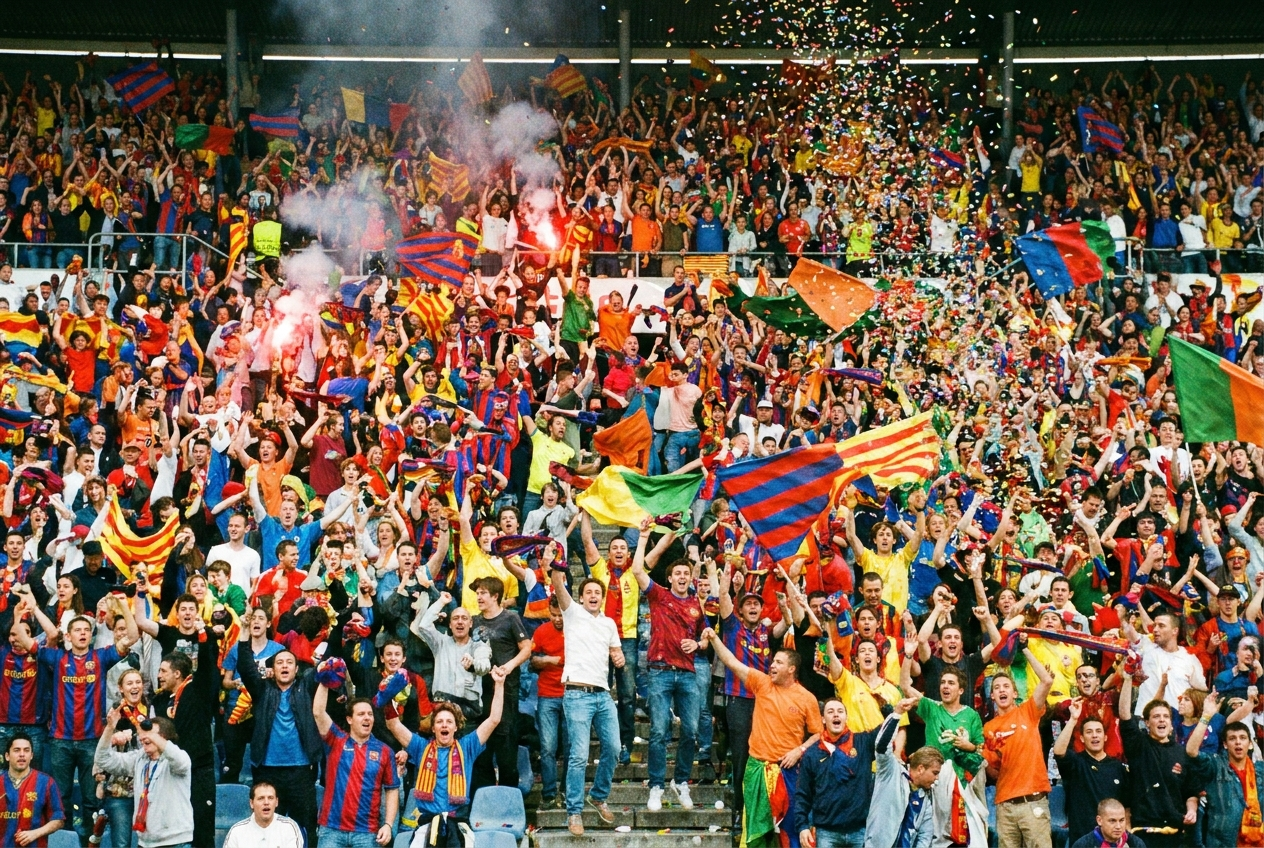
Traveling supporters become a visible force at this stage, with fan sections growing louder and more colorful as only the most committed supporters make the journey for a knockout fixture. Fan festivals across host cities give supporters without match tickets a way to watch on big screens alongside thousands of others, turning even non-matchday areas into part of the tournament's atmosphere.
Host cities across the United States, Mexico, and Canada each bring a distinct matchday culture, from pre-match tailgating traditions in the U.S. to the passionate stadium chants associated with Mexican football culture. The matchday experience now extends well beyond the 90 minutes, with pre-match build-up, halftime entertainment, and post-match celebrations all part of how fans experience these games in person.
Television audiences for Round of 16 matches typically spike compared to the group stage, as casual viewers tune back in once the tournament reaches its knockout phase. Streaming platforms have made it easier than ever to follow matches live regardless of location, while social media discussion around big moments — goals, red cards, VAR reviews — now shapes the conversation around a match almost as much as the result itself.
Players to Watch in the Quarterfinals
As the Round of 16 gives way to the quarterfinals, certain player profiles consistently become more influential, regardless of which specific names make it through.
Elite strikers who can create something from nothing become disproportionately valuable once defenses tighten up, since knockout football often comes down to a single clinical finish rather than a string of clear chances. Creative midfielders capable of unlocking a low block with a single pass or dribble are often the difference between a stalemate and a breakthrough against well-organized opposition.
Ball-winning midfielders protect a back line that's under more sustained pressure than at any previous stage of the tournament, and their ability to break up counters becomes essential as fatigue sets in. Defenders with composure on the ball and recovery pace matter more in the quarterfinals, where a single lapse in concentration against elite finishers can be fatal.
Goalkeepers frequently become the difference-makers of an entire knockout run — a string of key saves, or composure in a shootout, can define a nation's tournament as much as any outfield performance. Young stars emerging through the Round of 16 often carry that momentum directly into the quarterfinals, arriving with less tactical scouting built up against them than more established stars.
What separates knockout-stage performers from group-stage standouts usually comes down to composure under pressure, physical durability across a compressed schedule, and the tactical discipline to execute a gameplan for 90-plus minutes without the safety net of another group match to fall back on.
Editorial Update Note
This page is actively maintained and refreshed throughout every FIFA World Cup 2026 Round of 16 matchday. Fixtures, live scores, statistics, the knockout bracket, and the Daily Update Log above are all updated as official results are confirmed, so readers can rely on this page as a single, continuously current source rather than needing to check multiple outlets during the tournament.
Frequently Asked Questions
The Round of 16 falls in the middle stretch of the tournament calendar, arriving once all 12 groups have concluded and the newly introduced Round of 32 has trimmed the field down to sixteen teams. Because 2026 marks the first World Cup with 48 teams, the overall schedule runs longer than fans of previous tournaments are used to, and the knockout rounds are spread out to give squads adequate recovery time between matches, particularly given the added travel demands of a tournament hosted across the United States, Mexico, and Canada.
The eight Round of 16 fixtures are typically played across several matchdays rather than all at once, with two to three matches scheduled per day. Each fixture is single-elimination — win in regulation, extra time, or on penalties, and a team advances directly into the quarterfinals. There's no return leg and no aggregate scoring to fall back on. Exact dates, kickoff times, and venues are listed in the Fixtures table earlier on this page.
Qualification for this stage worked through two layers. The first was continental qualification for the World Cup itself, run independently by each of FIFA's six confederations, with additional places decided through inter-confederation playoff matches. As co-hosts, the United States, Mexico, and Canada received automatic entry, a first for a World Cup shared by three nations.
Once the 48-team field was set, qualification for the knockout stage ran through the group phase. Twelve groups of four teams played round-robin schedules, with the top two finishers in each group advancing automatically — 24 of the 32 teams that reached the Round of 32. The remaining eight places went to the best third-placed teams across all 12 groups. From that 32-team field, a new Round of 32 knockout round determined the sixteen teams that reached this page's stage. See the Qualified Teams table for the full breakdown.
FIFA World Cup 2026 Round of 16 matches are available through each host broadcaster's official channels in their respective countries, alongside FIFA's own digital properties. The FIFA Match Centre is the most reliable source for official live scores, match statistics, and lineup information directly from the tournament organizer.
Most major broadcasters offer accompanying streaming apps tied to a cable or satellite subscription, and several offer standalone streaming subscriptions that don't require a traditional cable package. For mobile viewing, official broadcaster apps and the FIFA app both typically offer live match coverage and push notifications. For live score tracking specifically, this page's Quick Stats and Live Match Results sections update as matches progress.
If a Round of 16 fixture is level after 90 minutes of regulation play, the match moves directly into extra time — two additional 15-minute halves, played in full regardless of whether a goal is scored early in either period. There's no replay scheduled for another day; the tie has to be settled in a single sitting.
If the score remains tied after the full 30 minutes of extra time, the match goes to a penalty shootout to determine which team advances. This process is covered in more detail in the How Extra Time Works and Penalty Shootout Rules sections earlier on this page.
The quarterfinals begin once all eight Round of 16 matches have concluded, typically following a short rest window built into the tournament calendar to give the remaining eight teams time to recover before their next fixture. That gap matters more in 2026 than in previous editions, given the extended knockout ladder created by the new Round of 32 stage and the travel distances between host cities across three countries.
During this window, coaching staffs typically finalize preparation around the confirmed quarterfinal opponent, factoring in any suspensions carried over from the Round of 16, along with fitness assessments for players carrying knocks or fatigue from extra-time matches. Exact quarterfinal dates, kickoff times, and venues will be published on this page as soon as the Round of 16 concludes.
Rather than guessing at rankings that shift as results come in, it's more useful to understand what actually separates genuine championship contenders once the tournament reaches the Round of 16. Squad depth is usually the first marker — teams capable of making five or six changes without a significant drop in quality tend to hold up better across a compressed knockout schedule.
Defensive stability matters just as much as attacking firepower at this stage, and tournament experience helps squads handle high-pressure moments, including shootouts, with more composure. Tactical flexibility rounds out the picture — the strongest contenders are usually the ones capable of adjusting their approach mid-tournament, which is exactly why the Round of 16 so often separates pretenders from genuine contenders.
The Golden Boot race remains one of the most closely followed individual storylines of the tournament, and it typically stays fluid well into the knockout rounds. A player leading the race after the group stage doesn't always hold that position by the final — plenty of past Golden Boot winners built their decisive tally specifically during knockout football.
The live leaderboard for this tournament, including goals, assists, and minutes played for each contender, is available in the Top Scorers section earlier on this page, and it updates as each Round of 16 match is completed.
This page is maintained as a live, continuously updated resource throughout the FIFA World Cup 2026 Round of 16 and beyond. Fixtures and live scores update in real time during match hours, the Live Match Results table updates as soon as a final whistle blows, and the knockout bracket refreshes to reflect confirmed winners as each tie is decided.
Beyond individual match updates, the Daily Update Log adds a new dated entry after every completed matchday, without removing or overwriting previous entries. Statistics, the Golden Boot leaderboard, and expert predictions are all refreshed on the same cadence.
Editorial Policy
This guide is built around accuracy first. Every fixture, statistic, and result referenced on this page is cross-checked against official FIFA sources, including the FIFA Match Centre and official tournament communications, before being published or updated. Where live data isn't yet available — such as results for matches that haven't been played — this page uses clearly marked placeholders rather than speculative figures, so readers can always distinguish confirmed information from pending updates.
Updates are made manually after each Round of 16 fixture concludes, rather than relying solely on automated feeds, to reduce the risk of errors making their way onto the page. If an inaccuracy is identified after publication, it's corrected promptly, and significant corrections are noted where appropriate. This page follows responsible sports journalism standards throughout: no unverified rumors are presented as fact, no results are reported before they're officially confirmed, and analysis is clearly separated from confirmed statistics and outcomes.
About the Author

Why Trust This Guide?
This guide is built on a research process that prioritizes official sources over secondhand reporting. Fixture data, results, and tournament rules referenced throughout this page are checked against FIFA's own official publications and match center data, rather than aggregated from unverified third-party outlets. Updates are made manually rather than through automated scraping, which allows for a layer of quality control that reduces the risk of errors making it onto the page.
The approach here is reader-first by design: sections are structured so you can find the specific information you need — a kickoff time, a Golden Boot leaderboard, a rule explanation — without wading through unrelated content. There's no clickbait framing, no exaggerated headlines designed purely to drive clicks, and no filler content added just to inflate word count. Every section on this page exists because it answers a real question football fans are actually asking during the Round of 16.
Recommended Reading
If you're following the FIFA World Cup 2026 Round of 16, a broader look at the tournament as a whole can add useful context — our FIFA World Cup 2026 Guide covers the full competition from the group stage through the final, including host city details and the expanded 48-team format in depth. Once the bracket reaches its final two teams, our FIFA World Cup 2026 Final guide covers the match itself in full — venue, format, tactics, World Cup Final history and records, and a complete FAQ.
For readers exploring topics beyond football, our Saudi Arabia Jobs Guide 2026 breaks down current employment opportunities and application pathways for those considering work in the Kingdom. Alongside it, our Saudi Arabia Business Guide 2026 walks through what's involved in setting up and operating a business there, covering licensing, market entry, and regulatory basics.
For readers interested in productivity and technology, our Best Free AI Tools Comparison rounds up and compares leading no-cost AI tools across writing, design, and research use cases, helping you find the right fit without a subscription commitment.
Official Resources
For information beyond what's covered on this page, official FIFA sources remain the most reliable reference point. The FIFA Official Website publishes tournament news, official statements, and confirmed scheduling directly from the governing body. The FIFA Match Centre offers live scores, match statistics, and lineups sourced directly from official match data. For a broader view of team strength and historical performance, the FIFA Rankings provide an official, regularly updated measure of how national teams compare globally.
Image Plan
The table below documents the planned imagery for this page. Each slot currently renders as a lightweight visual placeholder (see the Bracket section above for an example) so the page stays fast and free of broken links until final photography is licensed and uploaded.
| # | Image Title | Filename | Alt Text | Placement |
|---|---|---|---|---|
| 1 | Hero Stadium Image | world-cup-2026-round-of-16-stadium.png | FIFA World Cup 2026 Round of 16 stadium before kickoff | Hero section |
| 2 | Knockout Bracket Graphic | world-cup-2026-round-of-16-bracket.png | FIFA World Cup 2026 Round of 16 knockout bracket showing all eight fixtures | Bracket section |
| 3 | Qualified Teams Map | world-cup-2026-qualified-teams-map.webp | Map showing FIFA World Cup 2026 qualified teams by confederation | Qualified Teams section |
| 4 | Fixtures Calendar Graphic | world-cup-2026-round-of-16-fixtures-calendar.webp | FIFA World Cup 2026 Round of 16 fixtures and match calendar | Fixtures section |
| 5 | Match Action Photo | world-cup-2026-round-of-16-match-action.png | Players compete during a FIFA World Cup 2026 Round of 16 match | Match Preview section |
| 6 | Penalty Shootout Illustration | world-cup-2026-penalty-shootout.webp | Illustration explaining World Cup 2026 penalty shootout rules | Penalty Shootout section |
| 7 | VAR Review Graphic | world-cup-2026-var-review-explained.webp | Diagram explaining VAR review process at the FIFA World Cup 2026 | VAR Explained section |
| 8 | Golden Boot Leaderboard Graphic | world-cup-2026-golden-boot-leaderboard.webp | FIFA World Cup 2026 Golden Boot top scorers leaderboard | Top Scorers section |
| 9 | Team Celebration Photo | world-cup-2026-team-celebration.webp | Players celebrate a goal during the FIFA World Cup 2026 Round of 16 | Live Results section |
| 10 | Fan Atmosphere Photo | world-cup-2026-fan-atmosphere.png | Supporters celebrate in the stands during the FIFA World Cup 2026 | Fan Experience section |
| 11 | Host City Skyline Photo | world-cup-2026-host-city-skyline.webp | Host city skyline during the FIFA World Cup 2026 | Fan Experience section |
| 12 | Tactical Formation Diagram | world-cup-2026-tactical-formation-diagram.webp | Diagram illustrating common tactical formations used in the Round of 16 | Tactical Trends section |
Page Maintenance Guide
Keeping this page useful throughout the tournament requires a consistent update routine rather than a single publish-and-forget approach.
After every match: Update the Live Match Results table, the relevant Match-by-Match Preview entry, the Round of 16 Bracket, and the Quick Stats section at the top of the page.
After every matchday: Add a new dated entry to the Daily Update Log, update the Tournament Snapshot cards, and refresh the Top Scorers table and Standout Players section if any leaderboard positions have changed.
Daily: Check the Today's Matches section to ensure it reflects the correct fixtures, kickoff times, and any updated injury or team news for matches scheduled that day.
Weekly: Review the Tournament Statistics table and FIFA World Cup 2026 Predictions section to ensure both reflect the latest data and any shifting narratives around tournament favorites or dark horses.
After the Round of 16 ends: Finalize the Qualified Teams status column, lock in the completed bracket, and update the Historical Comparison and Records sections if any tournament records were broken during this stage.
Before the quarterfinals: Update the fixtures table and preview sections with confirmed quarterfinal matchups, dates, and venues, and archive the completed Round of 16 content in a clearly labeled section so readers can still reference it.
SEO Checklist
- Primary keyword
- Secondary keywords
- H1
- H2 hierarchy
- Internal links
- External references
- Image alt text
- FAQ
- Freshness updates
- Mobile friendly structure
- Helpful Content
- EEAT
- Discover friendly
- AI Overview friendly
- Featured snippet opportunities
Final Thoughts
The Round of 16 is where the FIFA World Cup 2026 stops being a month-long celebration of global football and becomes a genuine test of nerve. Every team that reached this stage has already survived a group phase and a brand-new Round of 32 unique to this expanded 48-team format, which means the sixteen sides left standing are, by definition, the ones who've handled pressure the best so far. From here, there's no cushion — a single mistake, a poorly timed suspension, or one missed penalty can end a nation's tournament outright, and that's exactly what makes this stretch of the competition so compelling to follow.
Throughout this guide, we've tried to cover the Round of 16 from every angle a football fan might actually need. That means the practical side — fixtures, kickoff times, venues, and live results — sitting alongside the context that makes those results meaningful: how the knockout format works, what extra time and penalty shootouts actually involve, how yellow card suspensions carry into the quarterfinals, and how VAR reviews can swing a match at its most decisive moment. We've also gone deeper into the numbers and history behind this stage, from Golden Boot tracking and tournament-wide statistics to the historical records that put this year's Round of 16 in context against previous editions stretching back to 1986.
What should you expect going forward? This page isn't a static preview published once and left untouched. It's designed to function as a living hub for the entire knockout stage — updated after every match, with a Daily Update Log that builds day by day rather than replacing what came before it, a knockout bracket that updates automatically as winners are confirmed, and statistics and leaderboards that shift as new performances redefine the tournament's storylines.
That's exactly why it's worth bookmarking. Over the course of the Round of 16, and into the quarterfinals that follow, the information here will keep shifting — new results, new statistics, new injury and suspension updates, new expert predictions as the picture of who's genuinely built for a deep run becomes clearer. Rather than piecing that information together across multiple sources during a fast-moving tournament, this page is designed to be the single reference point you return to, match after match, until the knockout stage resolves itself into a champion.
Bottom line: Football fans wait four years for this kind of tension, and the Round of 16 delivers it in concentrated form — eight matches, sixteen teams, and no way back for whoever comes up short. As results roll in over the coming days, check back here for the latest fixtures, live scores, statistics, bracket updates, and analysis covering every twist of the FIFA World Cup 2026 knockout stage.
Last Updated: Live Timestamp · Next Scheduled Update: After the next completed Round of 16 fixture.
Explore our complete FIFA World Cup 2026 guide for host cities, stadiums, the full 48-team format, and tournament-wide predictions.
Read the Full Tournament Guide →